Change the room, keep the words.
A theme in Quillard isn’t a colour swap, it’s a whole room, with its own paper, its own light, its own hardware, and, if you want it, its own sound. Every screenshot below is the real app.
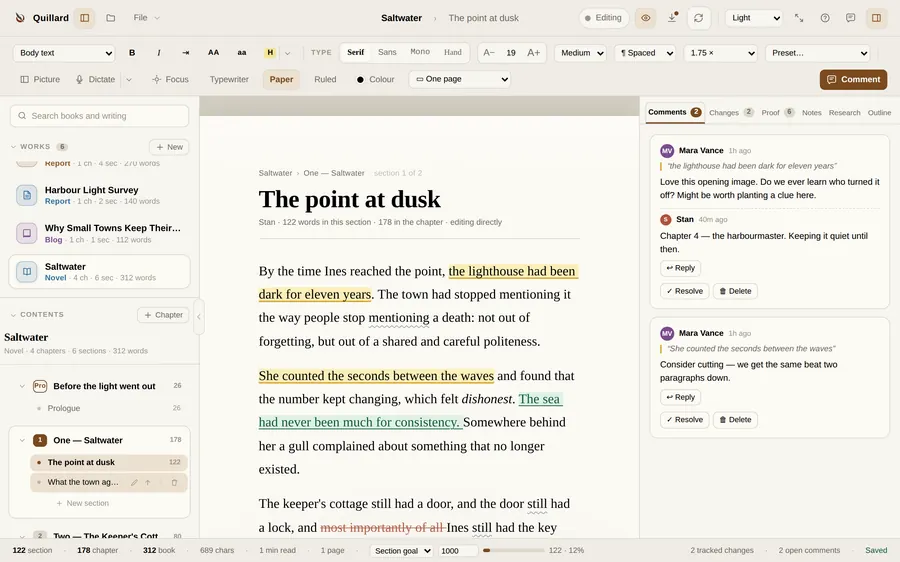
Light
The default room: warm paper, true black ink, nothing between you and the sentence. Ruled lines if you want them, plain sheet if you don’t.
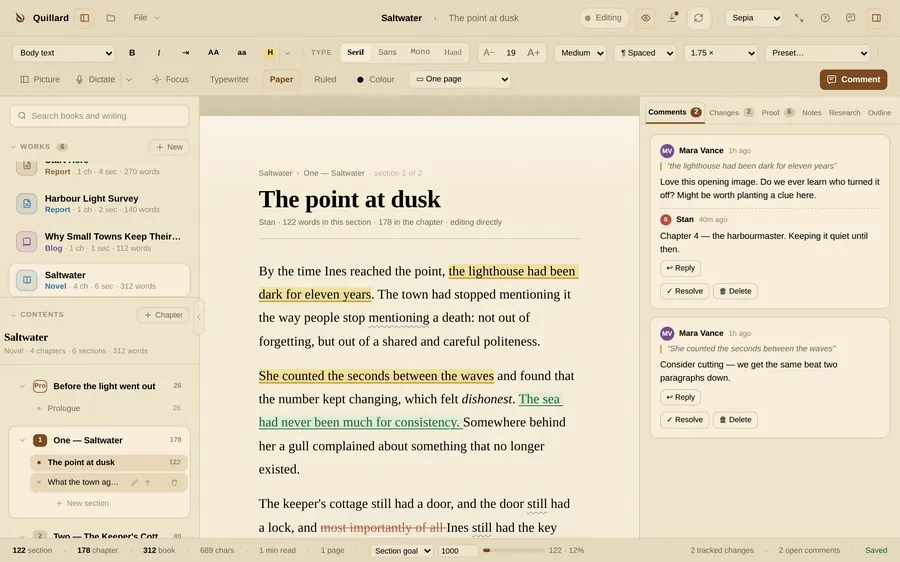
Sepia
The same quiet room, aged a little: cream deepens to parchment, and the whole page reads like a book that has been on the shelf a while.
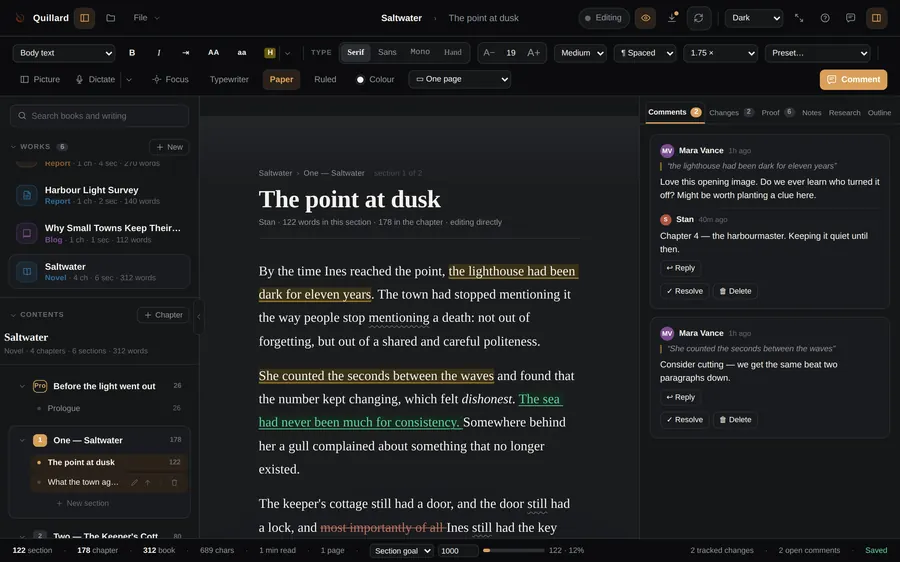
Dark
For the hours after everyone else has gone to bed. Deep charcoal, soft warm text, amber where your attention is needed and nowhere else.
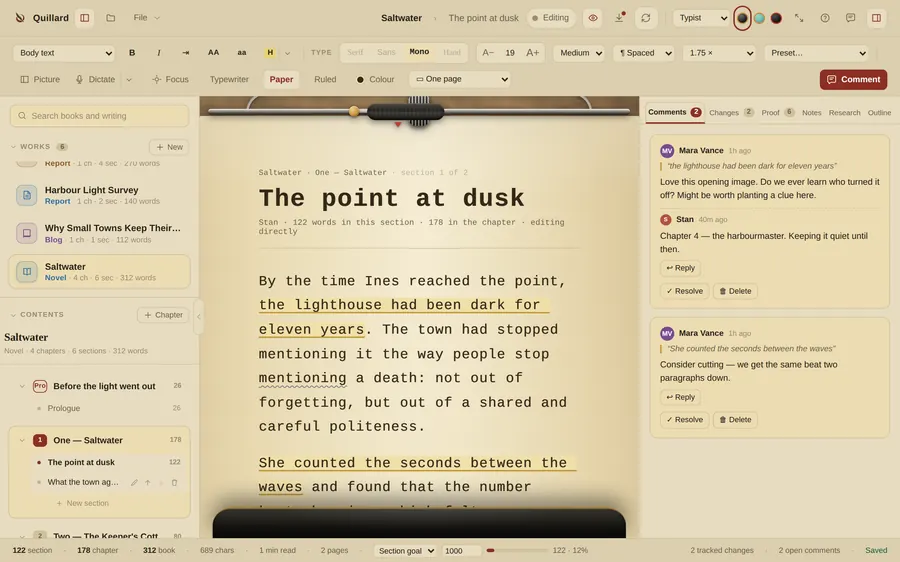
Typist, Antique
A typewriter, honestly rendered: the carriage rides above the page and follows your caret, slamming home on Enter. The keys sound like keys, if you let them. The desk is wood, because it should be.
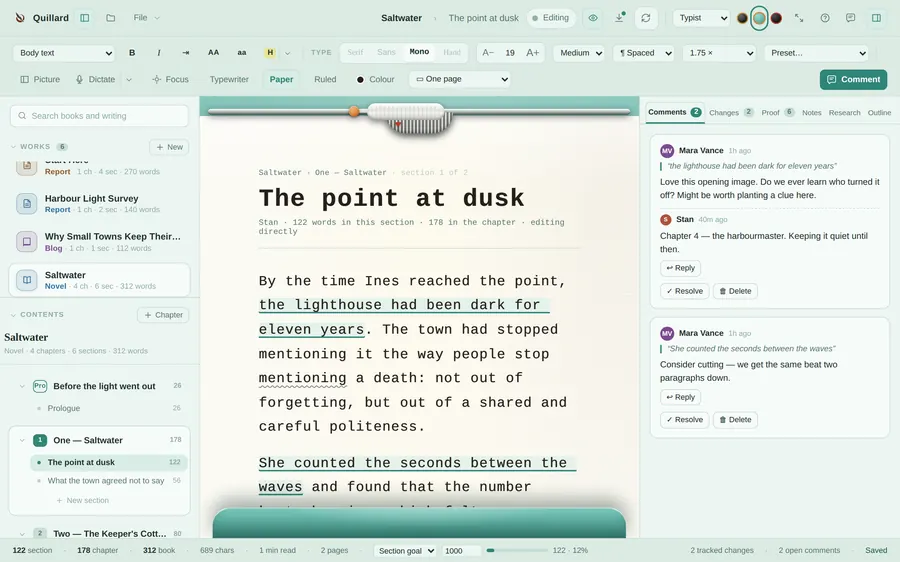
Typist, Mint
The cheerful one: a mid-century seafoam typewriter, teal chrome, and the same living carriage. Sunday-morning writing weather.
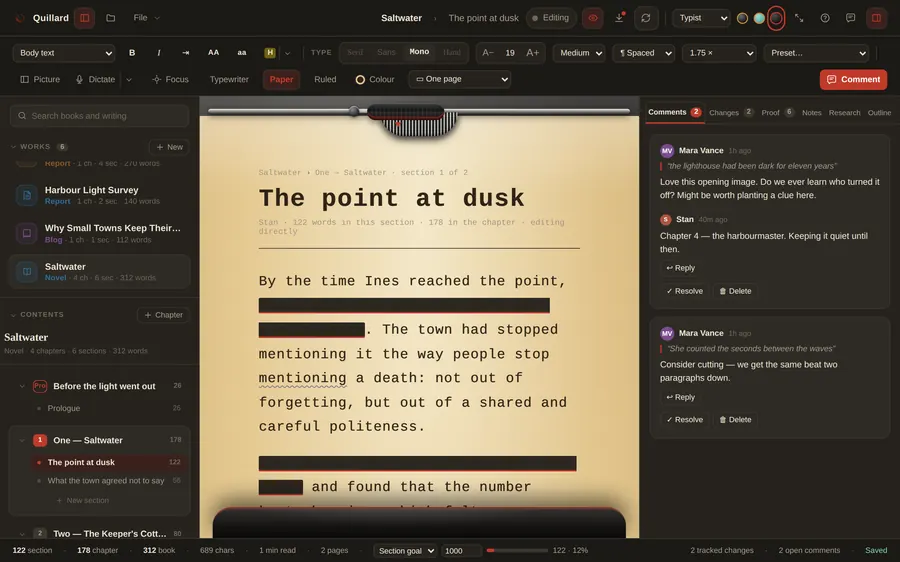
Typist, Noir
The dark room of the Typist family: piano-black machine, manila sheets, a red type-guide. For writing the chapters that need a lamp and a closed door.
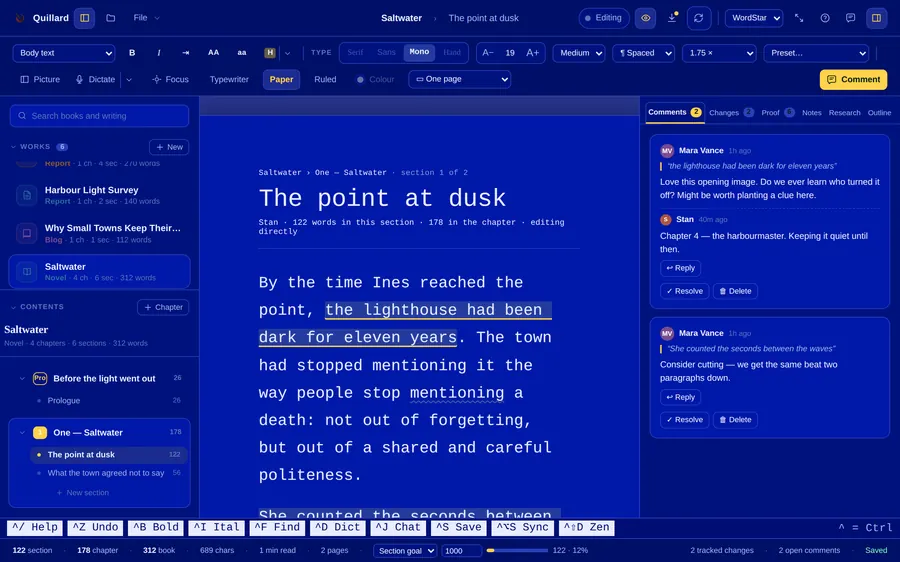
WordStar
An affectionate portrait of the machine a generation of novelists never gave up. Blue screen, mono type, mechanical key taps included.
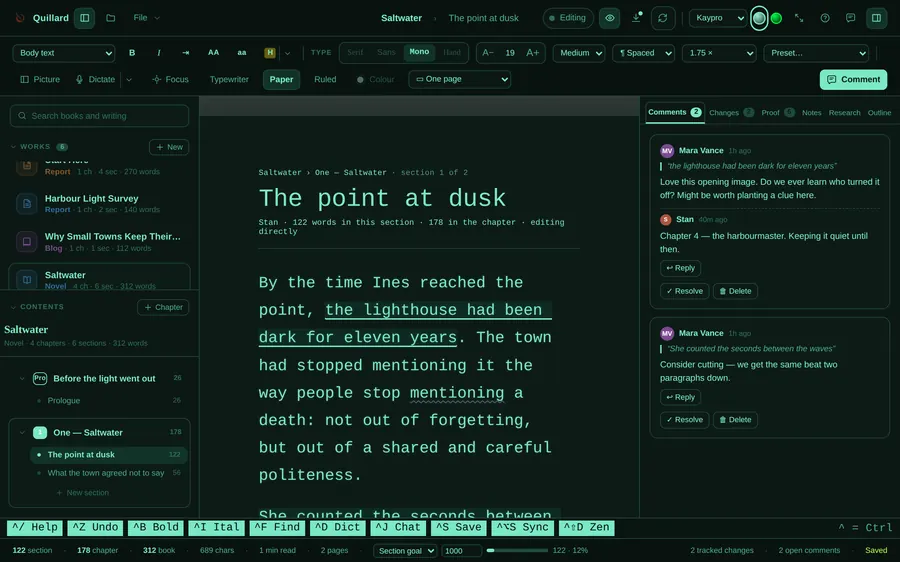
Kaypro, Phosphor
Green phosphor burning in a dark study, exactly as the little luggable drew it. Quiet, warm, strangely restful at 2 a.m.
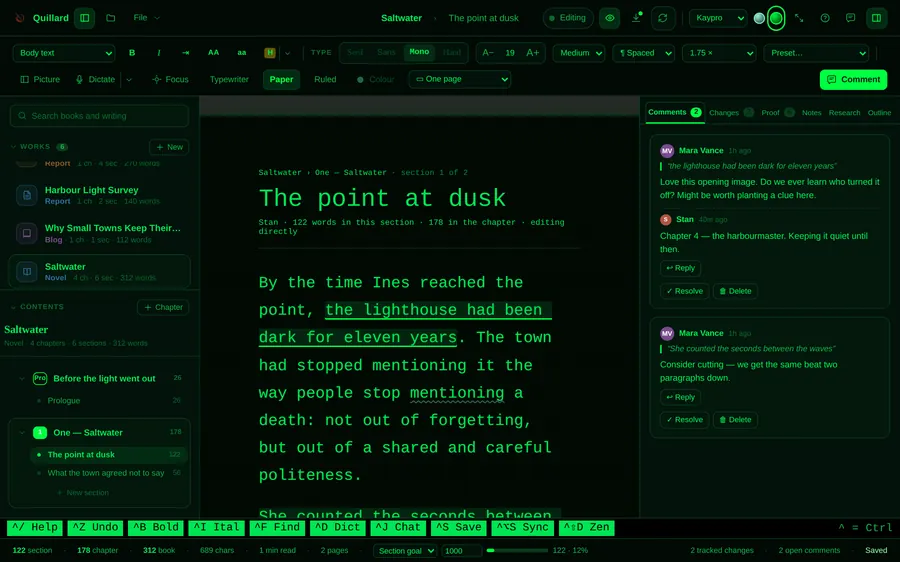
Kaypro, Matrix
The Kaypro’s second skin, for the nights that call for it: sharper green, darker glass, a faint scanline hum in the visuals.
Every room keeps your page, your caret and your shortcuts exactly where they were. Change rooms as often as the weather; the words never notice.
More rooms are coming.
The rooms are half the joy of making Quillard, and we keep adding them: new machines for the Typist desk, new screens for the retro study, new papers and lights for the quiet ones. Every new room ships in a regular update, free, and lands on the Updates page first. If there is a room you wish existed, say so on the Discord, the last two came from exactly that.